
One of the most common reasons homeowners end up dealing with bamboo repeatedly is failed removal attempts that never address the underlying problem. Bamboo removal fails without proper excavation because the visible canes represent only a small portion of the plant. The real structure lies underground in the form of an extensive rhizome network that can span large areas of a property.
Without excavation, most removal attempts rely on cutting bamboo to the ground or digging small sections where shoots are visible. This approach often fractures the rhizome system into multiple pieces. Each fragment remains capable of producing new growth, turning a single bamboo grove into dozens of emergence points spread across lawns, beds, and neighboring properties. What appears to be progress in the short term often leads to a much larger problem over time.
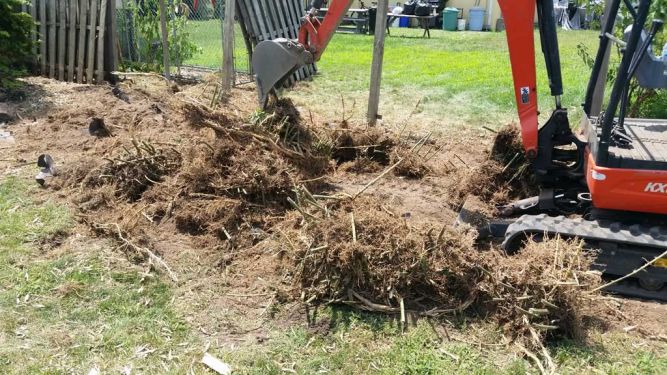
Another reason bamboo removal fails is improper regrading. When landscapers unfamiliar with bamboo disturb the soil without fully removing rhizomes, they can unintentionally bury live bamboo beneath fresh soil. These buried rhizomes continue growing and may resurface months or even years later, often far from the original work area. Homeowners are then left wondering why bamboo “came back” after it was supposedly removed.
Proper bamboo removal requires strategic excavation that traces the rhizome system methodically rather than randomly. This process minimizes fragmentation and allows the removal of entire sections of rhizome instead of breaking them apart. NJ bamboo removal specialists use excavation techniques developed specifically for bamboo, focusing on long-term results rather than short-term appearance. When bamboo is removed correctly the first time, follow-up becomes minor and manageable instead of a full-scale repeat project.
Common Running Bamboo in New Jersey and Pennsylvania
Recent Comments